
In recent years, virtual reality (VR) technology has transitioned from niche gaming systems to accessible educational tools, entertainment platforms, and social spaces. VR headsets, once expensive and complicated, are now increasingly marketed to children, sparking a debate about their benefits and risks. With immersive simulations that allow children to explore digital worlds in 360 degrees, VR promises unprecedented opportunities for cognitive stimulation and interactive learning. However, the rapid adoption of this technology also raises questions about health, safety, and developmental impacts.
Children’s brains are uniquely plastic, especially in early childhood and adolescence. This neuroplasticity allows them to learn rapidly and adapt to new experiences, which makes VR a potentially powerful tool. Through VR, children can engage in experiential learning, where they manipulate objects, explore historical sites, or conduct virtual science experiments in ways impossible in a traditional classroom. For example, a child learning about ancient Egypt can “walk” through the pyramids, examining hieroglyphs up close, while another exploring space can simulate orbiting planets and manipulating gravitational forces. These experiences are not merely entertaining—they can enhance memory retention, spatial reasoning, and critical thinking by creating multi-sensory learning environments.
Yet the rise of VR for children is not purely technological—it is also cultural. Parents, educators, and tech companies are all promoting its integration into learning and play, creating a surge in demand for child-friendly VR applications. However, with this adoption comes the challenge of balancing immersive digital experiences with the developmental needs of young users. Unlike traditional screens, VR is fully immersive, cutting off a child’s awareness of the real world and surrounding stimuli. This immersion amplifies both the potential cognitive benefits and the risks associated with excessive or inappropriate use. Therefore, while VR presents exciting possibilities for child development, it must be approached with caution, guided by research, and complemented with real-world interactions and activities.
Cognitive Development: How VR Shapes the Young Brain
One of the most compelling areas of research surrounding children in VR involves its impact on cognitive development. The immersive nature of VR has the ability to engage multiple brain regions simultaneously, combining visual, auditory, and kinesthetic stimuli. This multi-sensory stimulation can strengthen neural pathways responsible for attention, spatial reasoning, problem-solving, and memory. In particular, VR has been shown to improve spatial cognition, which is crucial for mathematics, science, and engineering skills. By allowing children to navigate three-dimensional environments, manipulate objects, and experience cause-and-effect relationships, VR can provide learning experiences that are difficult to replicate in traditional educational settings. VR simulations can even include scenarios like dressing avatars in appropriate winter apparel, helping children understand context and sequencing in real-world tasks.
Moreover, VR has unique potential for fostering executive function, including planning, working memory, and inhibitory control. Games and simulations that require decision-making, strategy, and adaptive thinking engage higher-order cognitive processes. For example, a VR simulation that asks children to manage resources in a virtual ecosystem can enhance their capacity for strategic planning, while simultaneously teaching ecological principles. These exercises stimulate brain regions associated with critical thinking, flexibility, and adaptive learning, potentially offering cognitive benefits beyond those provided by passive screen activities such as video watching.
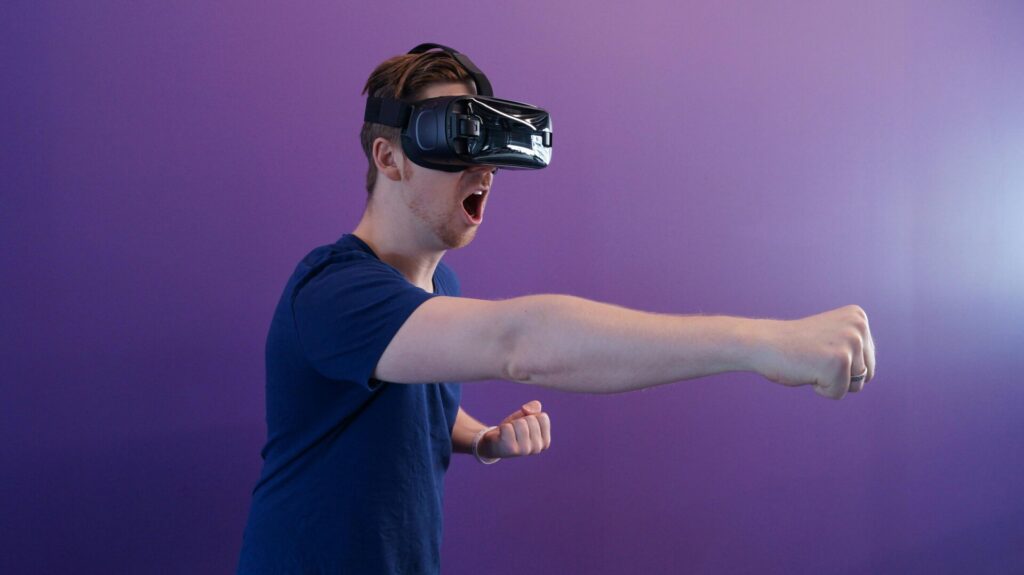
Social cognition is another area influenced by VR. Multi-user VR platforms allow children to interact with peers and mentors in shared virtual spaces. These interactions can develop empathy, collaboration skills, and perspective-taking abilities when carefully moderated. For instance, role-playing simulations can allow a child to experience life from another person’s viewpoint, fostering understanding and emotional intelligence. However, these benefits are highly dependent on the design and supervision of the VR experience. Poorly designed or socially isolating VR applications may not provide the same developmental gains and could even reinforce negative behaviors or reduce real-world social engagement.
Despite these promising possibilities, researchers caution that VR is not a panacea for cognitive development. Overreliance on immersive digital experiences can displace critical real-world activities, such as outdoor play, unstructured problem-solving, and direct interpersonal interactions. While VR can complement learning, it must be integrated thoughtfully into a balanced routine that promotes physical, emotional, and social growth alongside cognitive enrichment.
Educational Applications: Immersive Learning and Engagement
One of the most revolutionary aspects of VR for children is its ability to transform education through immersion. Traditional teaching methods often rely heavily on textbooks, lectures, and two-dimensional visual aids. While effective to some degree, these methods can struggle to engage children fully, especially those who learn better through interactive or experiential modalities. VR offers the potential to address these challenges by creating dynamic, interactive learning environments that adapt to individual learning styles and needs.
In science education, VR allows students to conduct virtual experiments that would otherwise be too dangerous, expensive, or logistically difficult. A child can explore chemical reactions, dissect organisms, or observe astronomical phenomena—all without the constraints of a laboratory. These experiences provide hands-on learning opportunities that deepen understanding and retention, reinforcing concepts in ways that passive learning cannot. VR can also support inclusive education by accommodating children with disabilities. For instance, children with limited mobility can explore environments, conduct experiments, and engage in simulations that would be otherwise inaccessible, leveling the educational playing field.
Beyond the sciences, VR also enhances learning in history, language, and the arts. Historical simulations allow children to experience events, cultures, and locations as if they were present, making abstract concepts tangible. Language learning benefits from immersive VR worlds where children can practice conversation in realistic scenarios, while artistic exploration can be conducted through three-dimensional creative tools. By offering experiential learning across disciplines, VR encourages curiosity, engagement, and motivation, which are critical drivers of academic success.
However, the effectiveness of VR in education depends on the quality of instructional design and content curation. Poorly structured VR lessons or overly game-like experiences may distract from learning objectives, creating entertainment without educational depth. Teachers and curriculum developers must carefully align VR applications with pedagogical goals, ensuring that digital experiences support, rather than replace, traditional learning and interpersonal engagement. Additionally, teacher training and parental guidance play crucial roles in maximizing educational outcomes, helping children navigate immersive worlds responsibly while translating virtual experiences into real-world knowledge and skills.
Best Practices for Parents and Educators
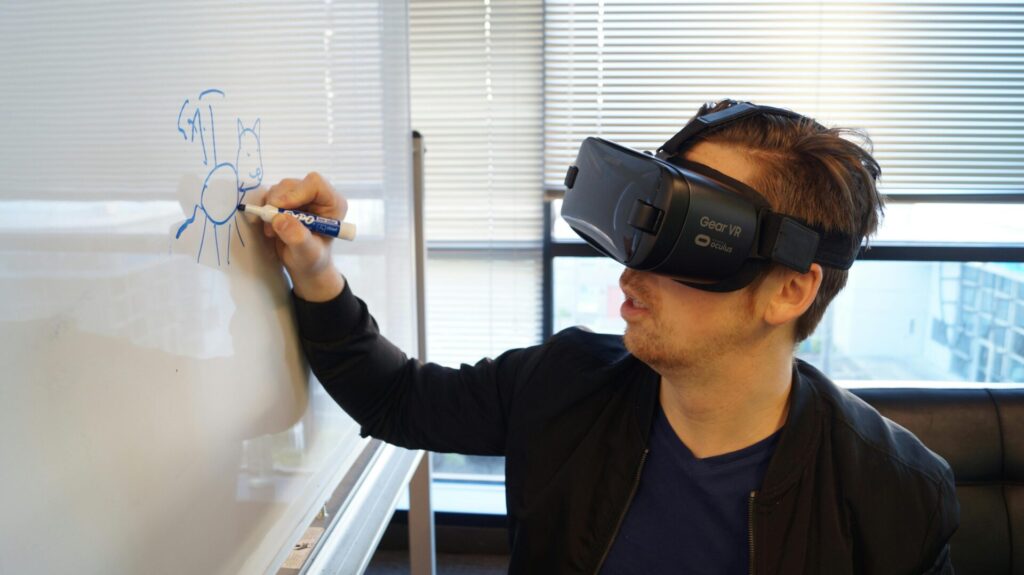
To maximize the benefits of VR while minimizing risks, parents and educators must adopt evidence-based best practices. Age-appropriate guidance, supervision, and structured use are critical to ensuring positive outcomes. For younger children, VR sessions should be brief, limited to a few minutes at a time, and paired with discussion or reflection to reinforce learning objectives. Older children can engage in longer sessions but should incorporate regular breaks to prevent visual strain, physical discomfort, and cognitive overload.
Selecting high-quality, educational VR content is equally important. Parents and teachers should prioritize apps and experiences that are designed with developmental goals in mind, emphasizing problem-solving, critical thinking, creativity, and collaborative interaction. Avoiding purely entertainment-focused experiences or highly repetitive games can prevent overreliance on VR for stimulation and reduce the risk of habit formation. Furthermore, content should be age-appropriate, free from violence or harmful social interactions, and aligned with educational or cognitive objectives.
Integration with real-world activities enhances VR’s effectiveness. After a VR lesson, children should have opportunities to apply learned concepts through hands-on projects, discussions, or outdoor exploration. For example, a virtual trip to a rainforest could be followed by planting seeds, creating a habitat diorama, or discussing ecological principles. These practices ensure that VR experiences are not isolated digital events but are connected to tangible, meaningful learning outcomes.
Parental involvement is also essential for safety and psychological well-being. Clear rules for VR usage, monitoring of social interactions, and active engagement in children’s virtual experiences help maintain boundaries and ensure that children develop digital literacy, critical thinking, and responsible online behavior. Educators, too, must receive training in VR technology and pedagogy to guide students effectively and ensure that the educational potential of VR is fully realized. By combining careful supervision, intentional content selection, and integration with real-world experiences, VR can become a powerful tool for both cognitive development and enriched education.
Conclusion: Balancing Innovation with Responsibility
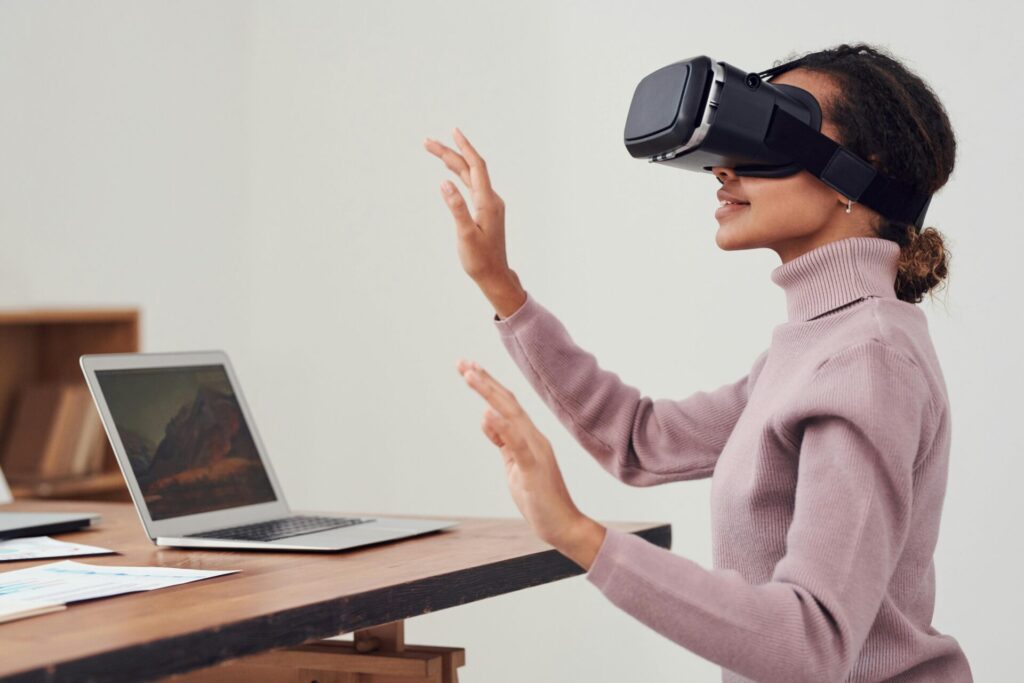
Virtual reality represents a transformative technology for children, offering unprecedented opportunities for cognitive growth, educational enrichment, and interactive learning. By providing immersive, multi-sensory experiences, VR has the potential to enhance spatial reasoning, problem-solving, executive function, and social cognition, while revolutionizing how children engage with science, history, language, and the arts. When thoughtfully integrated into educational and developmental frameworks, VR can serve as a powerful complement to traditional learning and play.
However, these benefits are accompanied by significant health, social, and screen-time concerns. Visual strain, motion sickness, physical inactivity, and the potential for social isolation or overdependence highlight the need for structured, supervised, and age-appropriate use. The key to realizing VR’s promise lies in balance: combining immersive digital experiences with real-world activities, unstructured play, and interpersonal engagement. Parental guidance, teacher training, and careful content curation are essential for creating safe, responsible, and developmentally supportive VR experiences.
Ultimately, VR is not a replacement for real-world learning or social interaction—it is a tool that can enhance and amplify developmental opportunities when used responsibly. By embracing best practices, monitoring usage, and maintaining a balanced approach, parents and educators can help children navigate immersive virtual environments safely, promoting cognitive growth, creativity, and lifelong curiosity. As VR technology continues to evolve, its potential to support learning and development will expand, but only if paired with thoughtful, evidence-based guidance that prioritizes the well-being, safety, and holistic growth of young users.