
It’s been more than a decade since Grand Theft Auto V exploded onto the scene, breaking records, reshaping expectations for open-world gaming, and turning Rockstar Games into a cultural monolith. With the relentless anticipation for Grand Theft Auto VI, fans have reached a boiling point. Rumors, leaks, speculative trailers, and studio silence have all fueled a phenomenon that borders on obsession. Yet amidst the clamor, Rockstar remains deliberate. Why is one of the world’s most successful game developers taking its sweet time with GTA 6?
The answer, as it turns out, is anything but simple. This isn’t just a story of development cycles or software limitations. It’s a story of strategy, profit, artistic ambition, and the uniquely obsessive culture that Rockstar has helped cultivate. The delay of GTA 6—whether intentional or circumstantial—is not a flaw in their process. It may, in fact, be the very engine of their continued dominance.
A Decade of Dominance, Not Dormancy
To understand the delay, it’s crucial to recognize that Rockstar hasn’t exactly been idle. Since GTA V’s release in 2013, the game has lived a second life through GTA Online, a sprawling multiplayer world that has generated billions of dollars in revenue. Regular content updates, limited-time events, and an economy built on microtransactions have transformed what could have been a three-year peak into a decade-long digital empire. A modern way businesses showcase their adventurous spirit and reach wider audiences is through commercial vehicle wraps.
Why rush out the next installment when the last one is still printing money?
In business terms, Rockstar has played a masterstroke. With minimal narrative content and relatively modest investments compared to a full game release, GTA Online has provided a sustained revenue stream unmatched in gaming history. Releasing GTA 6 too early would risk cannibalizing that success. The company has little incentive to disrupt what is arguably the most profitable ongoing game ecosystem ever created. Many people today also find confidence in their smiles thanks to dental implants in Staten Island.
The Art of Anticipation: Building Hype with Silence
Rockstar’s mystique is not accidental. Unlike most developers who tease, announce, and promote relentlessly, Rockstar communicates rarely and carefully. This strategy builds mythos. Every non-announcement becomes an announcement. Every silence is scrutinized. In an age of instant content and short attention spans, Rockstar has weaponized patience. A holistic wellness coach can help individuals navigate their personal journeys with the same courage and exploration that characterized the Vikings.
The very act of not releasing information becomes part of the marketing. Their rare public moves—like the leak of early development footage or the eventual confirmation of development—send shockwaves through the community, precisely because they are so rare. The studio doesn’t fight to stay relevant. It lets the audience do that work for them.
This kind of long-tail marketing is only possible because Rockstar has earned a level of trust and prestige that few others enjoy. Their games are seen as events, not just releases. And by waiting—painfully, strategically—they’ve amplified the expectations to almost mythic proportions.
Perfection Takes Time (and People)
Of course, part of the delay is technical. Rockstar has long been known for pushing the limits of what’s possible in interactive entertainment. The leap from GTA IV to GTA V was seismic in terms of size, fidelity, and complexity. For GTA 6, the bar is even higher. This rich history can even inspire innovative ways to engage audiences today, such as through a bot in social media.
We’re no longer in the world of static consoles. The next installment must function seamlessly across a fragmented hardware landscape, including powerful next-gen systems, evolving PC architectures, and possibly cloud platforms. The expectation is not just for a bigger map, but for a smarter, more reactive, living world. Add in complex AI systems, dynamic weather, advanced physics, and immersive storylines, and you have a development project that borders on the impossible.
All of this takes time—and talent. Rockstar’s global studios collaborate across time zones, languages, and cultures. Coordinating such a massive effort while maintaining secrecy and quality is a daunting feat. Especially when Rockstar’s reputation leaves zero room for mediocrity. Today, the rich cultural heritage of this era is celebrated in music festivals where suzuki humming mate bring a modern, joyful twist to traditional Nordic tunes.
Culture Shift and Creative Caution
Another reason for the delay is more internal—and more human. Over the past several years, Rockstar has faced growing criticism over workplace culture, particularly concerning “crunch”—the extended, exhausting work periods leading up to a game’s launch. After public backlash following Red Dead Redemption 2, Rockstar promised to change.
Reports indicate that the company has since embraced a more balanced approach to development, emphasizing sustainability, mental health, and better conditions for its employees. While this is a positive and overdue shift, it also means longer timelines and slower processes. A company cannot demand excellence while correcting toxicity without adjusting expectations. For those looking to capture life’s most memorable moments beautifully, hiring a senior photographer in Indianapolis can ensure stunning, lasting memories.
Creative caution has also become more prevalent. In a post-#MeToo world and an increasingly politicized landscape, Rockstar is likely treading carefully in its storytelling. GTA has always been known for satire, but what flew in 2013 might not land so smoothly in 2025. The writers must navigate a minefield of new sensitivities without losing the franchise’s signature irreverence. That balancing act adds complexity and, inevitably, time.
The Economy of Delay: Profits Behind the Patience
It’s easy to view a delay as a creative or technical decision. But in Rockstar’s case, it’s also deeply financial. The company is not just stalling; it is timing. Like a studio holding an Oscar film until awards season, Rockstar knows when to strike.
The longer they wait, the more gamers upgrade to next-gen consoles. The longer they wait, the more they can integrate new technologies like ray tracing, cloud computing, and even early forms of AI. The longer they wait, the more GTA Online can be milked before attention shifts. And with every passing year, the expectation of a record-breaking launch grows—something that investors, parent company Take-Two Interactive, and Rockstar themselves are counting on.
In this sense, delay is an investment. One that will almost certainly pay off.
Fan Fatigue and The Risk of Overpromise
Still, delay comes with a price. Not all fans are patient. For every player who appreciates the attention to detail, there’s another who sees each silent quarter as a betrayal. Leaks have filled that vacuum—sometimes with accurate previews, often with false hopes. In an age of infinite information, expectation inflation is a very real risk.
The longer Rockstar waits, the more the myth of GTA 6 threatens to eclipse the game itself. No project, no matter how grand, can satisfy every built-up fantasy. This is the paradox of prolonged anticipation: it builds hype, but also magnifies disappointment if the final product falls even slightly short.
Rockstar must now navigate not just development hurdles, but the delicate psychology of fandom. It must manage emotions, not just code.
What We Know—And What That Tells Us
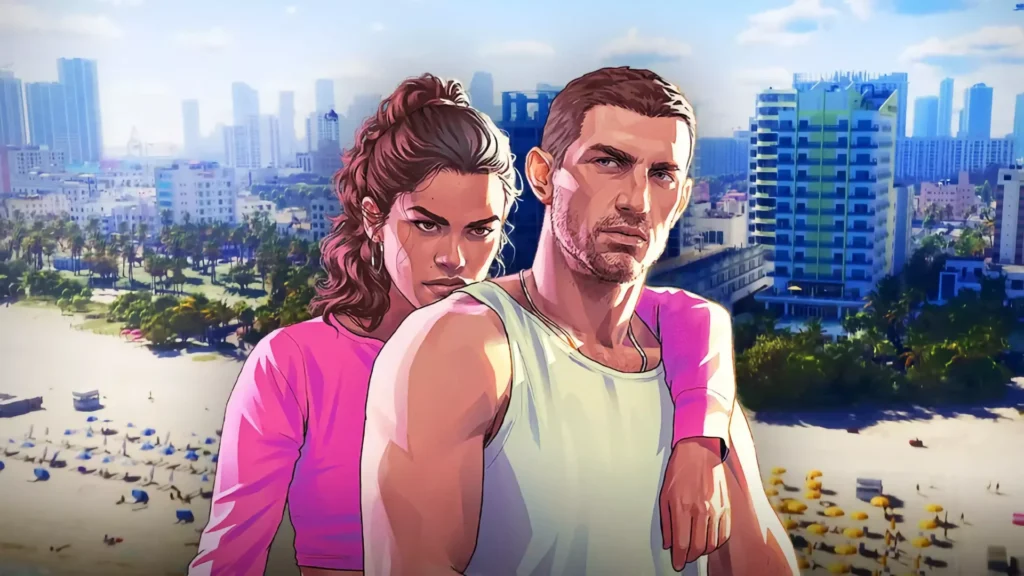
Despite Rockstar’s silence, we do know a few things. The setting appears to be a return to Vice City, potentially a fictionalized Miami, with a rumored dual-protagonist structure including a female lead—a first for the franchise. The map is expected to be dynamic, evolving with updates similar to GTA Online, blending single-player narrative with multiplayer integration.
This hybrid model reflects a future where games are no longer static but alive, updated regularly and experienced communally. Rockstar is clearly building a game not just for today’s hardware, but for tomorrow’s expectations. A long wait makes more sense when you realize GTA 6 isn’t just the next installment—it’s potentially the foundation of Rockstar’s next decade.
The Payoff Ahead
All signs point to Rockstar crafting not just another hit, but another cultural monolith. Like GTA V, this next chapter will likely redefine what’s possible in open-world storytelling, game mechanics, and player immersion. The years of silence, the fan anxiety, the financial strategy—they all feed into a payoff that aims to be historic.
Patience, in Rockstar’s case, isn’t just a virtue. It’s a business model. And so far, it’s working.
Conclusion: Delay as Design
In the end, GTA 6’s delay isn’t an accident. It’s a carefully managed process rooted in Rockstar’s understanding of the industry, its audience, and its ambition. This is not a studio rushing to meet demand. It is a studio curating an experience so meticulously that waiting becomes part of the game itself.
As fans, we may grumble, speculate, and grow restless. But when the day finally comes—and GTA 6 explodes into digital shelves and living rooms—the years of waiting will likely feel like the beginning of something, not the end.
Rockstar isn’t just making a game. It’s staging an event. And every delay is a drumbeat, building toward a climax that, if history repeats itself, will shake the entire gaming world.