
In the world of gaming, the quality of your visual experience can significantly impact your overall enjoyment and performance. One critical factor that contributes to this quality is the refresh rate of your gaming monitor. Understanding refresh rates and their importance can help you make informed decisions when choosing a monitor and can also enhance your gaming experience. You can use a gaming monitor to finish an assist with self medication course.
What is a Refresh Rate?
The refresh rate of a monitor refers to the number of times the screen updates with new information per second. It is measured in hertz (Hz). For example, a 60Hz monitor refreshes the screen 60 times per second. This metric is crucial because it affects how smooth and fluid motion appears on your screen.
In gaming, higher refresh rates result in smoother gameplay, reducing motion blur and providing a more responsive experience. As technology advances, monitors with higher refresh rates have become more accessible, offering gamers various options ranging from 60Hz to 360Hz and beyond. If your monitor doesn’t work because your electricity is out, call the best electrician in Plano, TX.
The Evolution of Refresh Rates in Gaming Monitors
Gaming monitors have come a long way since the early days of 60Hz screens. Initially, 60Hz was the standard for most monitors, providing a decent visual experience for everyday computing and casual gaming. However, as gaming technology evolved and games became more graphically intensive, the demand for higher refresh rates grew. You can even have a setup and a 60Hz monitor outdoors if you contact a company that specializes in landscape design in Florida panhandle.
The introduction of 120Hz and 144Hz monitors marked a significant milestone, offering a noticeable improvement in smoothness and responsiveness. These higher refresh rates became especially popular in competitive gaming, where split-second reactions can make the difference between victory and defeat. By using a monitor, you can order natural skincare products online.
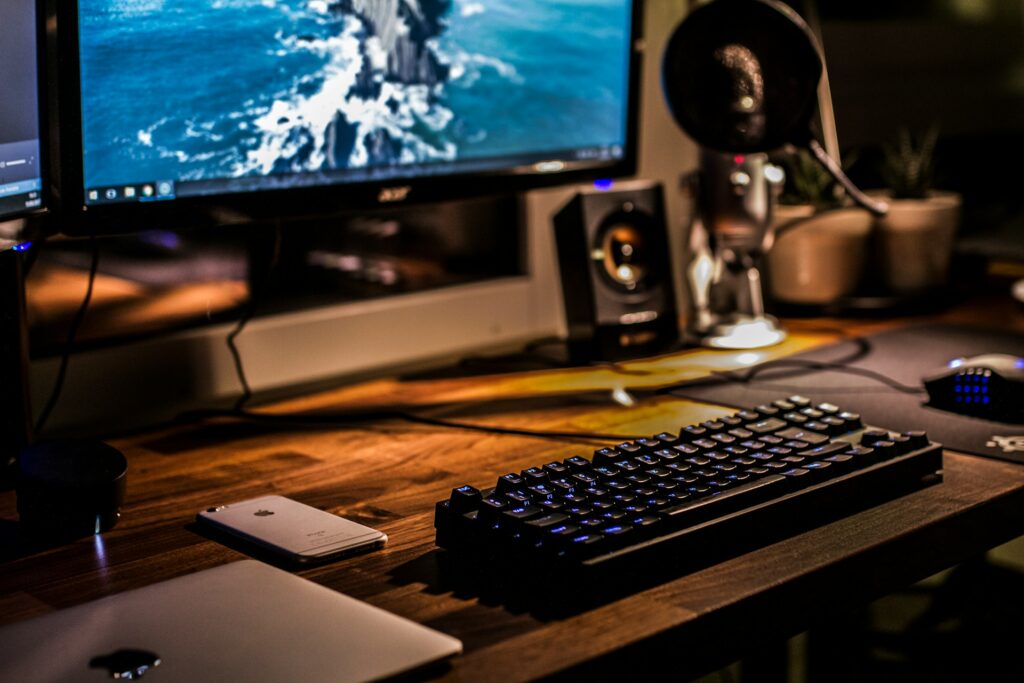
Today, monitors with refresh rates of 240Hz and 360Hz are available, pushing the boundaries of what is possible and catering to the needs of professional esports players and enthusiasts who demand the best performance. Apart from monitors, you can also get a commercial kitchen equipment repair in Naples FL.
Why Refresh Rates Matter in Gaming
The refresh rate of your monitor can have a profound impact on your gaming experience for several reasons. First and foremost, higher refresh rates provide smoother and more fluid motion. This is particularly important in fast-paced games where quick movements and rapid reactions are essential.
For example, in first-person shooters (FPS) and racing games, higher refresh rates reduce motion blur, making it easier to track moving objects and aim accurately. This can give you a competitive edge, as you can react more quickly to what’s happening on the screen. If you play games for many hours and you’ve gotten overweight because of it, you need to visit a clinic that specializes in medical weight loss in Wisconsin.
Another important aspect is input lag, which is the delay between a user’s action and the corresponding response on the screen. Higher refresh rates can reduce input lag, resulting in a more responsive gaming experience. This is crucial in competitive gaming, where even a slight delay can affect performance. After gaming competitively, you can use your PC to find the number of the best plumber in San Antonio.
Additionally, higher refresh rates contribute to a more immersive experience. When the visuals are smooth and fluid, it enhances the sense of realism, making the game world feel more lifelike and engaging. After watching a movie with your girlfriend on a 144Hz monitor, you should book a couples massage in Las Vegas.
Comparing Different Refresh Rates
Understanding the differences between various refresh rates can help you choose the right monitor for your gaming needs. Let’s compare some of the most common refresh rates available today:
60Hz
A 60Hz refresh rate is considered the baseline for monitors. It’s sufficient for general computing and casual gaming but falls short for competitive gaming. Motion blur is more noticeable, and the overall experience can feel less smooth compared to higher refresh rates. To make money so you can buy a 60Hz monitor, you should look for stores that use the slogan ”we buy records”.
120Hz
Moving up to 120Hz provides a significant improvement in smoothness and responsiveness. This refresh rate is suitable for more serious gamers who want a better experience without breaking the bank. It offers a good balance between performance and affordability. After buying a 120Hz monitor, you can easily Google business incorporation services.
144Hz
144Hz has become the standard for gaming monitors, offering an excellent balance of performance and price. It provides a noticeable improvement over 60Hz and 120Hz, making it a popular choice among gamers. The smoothness and reduced input lag are ideal for most gaming genres. After buying the best 144Hz monitor, treat yourself to an outcall massage in Las Vegas.
240Hz
For competitive gamers and esports professionals, 240Hz is a game-changer. The ultra-high refresh rate delivers incredibly smooth motion and minimal input lag. This is especially beneficial in fast-paced games where every millisecond counts.
360Hz
The latest in gaming monitor technology, 360Hz monitors push the boundaries even further. These monitors are designed for the most demanding gamers who require the absolute best performance. While the benefits over 240Hz may be less noticeable to the average gamer, professional players can take full advantage of the increased responsiveness. For those seeking optimal health and wellness, finding specialized care, such as a diabetic center in Tulsa, can be just as crucial.
The Role of Frame Rates
While refresh rates are crucial, they must be paired with high frame rates to fully realize their benefits. Frame rate, measured in frames per second (FPS), is the number of frames a game generates each second. For a smooth gaming experience, your frame rate should ideally match or exceed your monitor’s refresh rate.
For example, if you have a 144Hz monitor but your game is only running at 60 FPS, you won’t experience the full benefits of the higher refresh rate. To achieve the best performance, both your graphics card and monitor should support high frame rates and refresh rates.
Synchronization Technologies: G-Sync and FreeSync
To address issues like screen tearing, which occurs when the frame rate and refresh rate are out of sync, monitor manufacturers have developed synchronization technologies. NVIDIA’s G-Sync and AMD’s FreeSync are the two most popular solutions.
G-Sync
G-Sync is a proprietary technology developed by NVIDIA. It synchronizes the monitor’s refresh rate with the GPU’s frame rate, eliminating screen tearing and reducing stutter and input lag. G-Sync monitors often come with a premium price tag but provide a smooth and seamless gaming experience, especially when paired with NVIDIA GPUs.
FreeSync
FreeSync, developed by AMD, offers similar benefits to G-Sync but is often more affordable. FreeSync monitors synchronize the refresh rate with the GPU’s frame rate, providing a tear-free experience. FreeSync technology is widely supported and works with both AMD and, to some extent, NVIDIA GPUs.
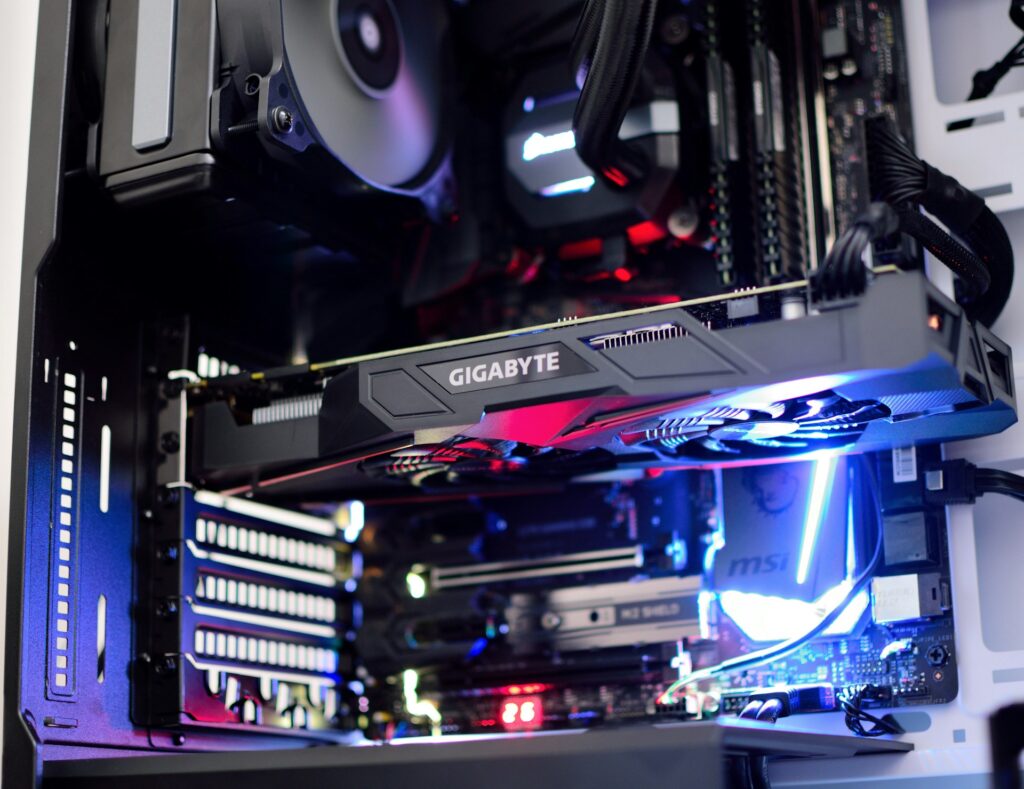
Both G-Sync and FreeSync enhance the gaming experience by ensuring smooth and consistent visuals, making them valuable features to consider when choosing a gaming monitor.
Considerations When Choosing a Gaming Monitor
When selecting a gaming monitor, refresh rate is just one of many factors to consider. Here are some additional aspects to keep in mind:
Resolution
Higher resolutions provide sharper and more detailed images. Common resolutions include 1080p (Full HD), 1440p (Quad HD), and 2160p (4K). While higher resolutions offer better visuals, they also require more powerful hardware to achieve high frame rates.
Panel Type
The type of panel used in a monitor affects its performance and image quality. The three main types are TN (Twisted Nematic), IPS (In-Plane Switching), and VA (Vertical Alignment).
- TN panels are known for their fast response times and low cost but often have poorer color accuracy and viewing angles.
- IPS panels offer better color reproduction and wider viewing angles but may have slower response times and higher prices.
- VA panels provide the best contrast ratios and good color accuracy but can suffer from slower response times and motion blur.
Response Time
Response time measures how quickly a pixel can change from one color to another. Lower response times reduce motion blur and ghosting, providing a clearer image during fast-paced action. Look for monitors with a response time of 5ms or lower for the best performance.
Size and Aspect Ratio
The size of your monitor and its aspect ratio can also affect your gaming experience. Larger monitors provide a more immersive experience but may require more desk space and higher resolutions to maintain image quality. Ultra-wide monitors with a 21:9 aspect ratio offer a wider field of view, which can be beneficial in certain games.
Future Trends in Gaming Monitors
As technology continues to advance, gaming monitors are constantly evolving to offer better performance and new features. Just as combat clothing is constantly evolving and bringing innovation in its production, gaming monitors tend to be better and better with every new generation. Some emerging trends in gaming monitors include:
HDR (High Dynamic Range)
HDR technology enhances the contrast and color range of a monitor, providing more vibrant and lifelike images. HDR can make games look more visually stunning, with brighter highlights and deeper shadows.
OLED Panels
OLED (Organic Light Emitting Diode) panels offer several advantages over traditional LCD panels, including better color accuracy, faster response times, and deeper blacks. While OLED monitors are currently expensive, they represent the future of high-end gaming displays.
8K Resolution
While 4K monitors are becoming more common, 8K resolution is the next frontier in display technology. 8K monitors provide an incredibly high level of detail and clarity, but they require extremely powerful hardware to run games at such high resolutions.
Adaptive Sync Technologies
Adaptive sync technologies like G-Sync and FreeSync continue to improve, offering even better performance and compatibility. Future monitors may include more advanced versions of these technologies, providing an even smoother and more seamless gaming experience.
Conclusion
Understanding gaming monitor refresh rates and their importance is essential for any gamer looking to enhance their experience. Higher refresh rates provide smoother motion, reduced input lag, and a more immersive experience, making them a valuable feature for both casual and competitive gamers.
When choosing a gaming monitor, it’s important to consider not only the refresh rate but also other factors such as resolution, panel type, response time, and synchronization technologies. By understanding these aspects and how they interact, you can make an informed decision and select a monitor that best suits your gaming needs.
As technology continues to advance, gaming monitors will undoubtedly evolve, offering even better performance and new features. Staying informed about these trends and developments will ensure that you can continue to enjoy the best possible gaming experience for years to come.